


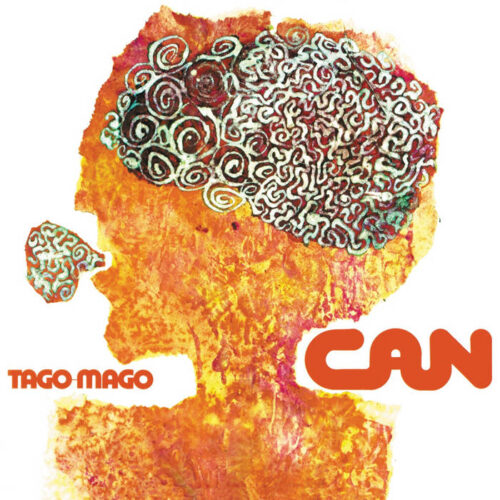
CAN // Tago Mago


Recently, I’ve been watching a lot of movies from the 70s. One of my New Years things was to stop watching TV and fill in some of the large gaps in my cinema knowledge. I went to film school, so a lot of the big landmark movies (Citizen Kane, Casablanca, Laurence of Arabia, etc) were covered there, as well as plenty more niche corners of cinema history. But the trouble with going to school for art is that a lot of it starts to feel like, well, homework. Or maybe, thanks to the arrogance of youth, I just tended to believe on some level that the most important things to pay attention to were those things going on immediately around me, not in the decades before I was alive. Whatever the reason, at film school I tended to delve into the past exactly the amount that was required for my classes, and no more. But recently, possibly due to the overwhelming bleakness of our present moment and the art that reflects it (Bugonia, anyone?) I have been much more interested in looking backward, an exercise which has turned out to be an unexpected source of inspiration, respite, and self-reflection.
The last few weeks have been very heavy with the work of Sidney Lumet and Robert Altman. Dog Day Afternoon, Network, MASH, 3 Women, Nashville, The Long Goodbye. A striking aspect of these films is the extent to which they bristle with the kind of violence, despair, absurdity, cynicism, brutality, and nihilism that I, for one, have come to associate with a distinctly 21st century mode of living. Even when they are funny, charming, or stylish (and these movies are often all of those things), you never lose sight of something hard and unsmiling at their hearts. Maybe these similarities are not all that surprising. After all, so many of our era’s trademarks – American forever wars, criminal politicians, economic precarity, environmental apocalypse, peak oil, mass culture, and corporate propaganda – are all cultural staples which have parallels and mirror images in the 70s.
Still, it did surprise me. I was surprised by how familiar it all felt. I was surprised by how many of the monologues could be delivered, nearly word for word, today, and remain perfectly resonant. If you want an example, watch this scene from Network. Or this one, which includes the line “There is no America. There is no democracy. There is only IBM and ITT and AT&T and DuPont, Dow, Union Carbide, and Exxon. Those are the nations of the world today.” Don’t get me wrong, it’s not like I thought that corporate oligarchy was some kind of new problem invented by Facebook, but there was something about seeing these movies railing against the same powers that we are railing against today, using the same words, and sharing the same rage that got to me. I suppose I was surprised to confront the utter unoriginality of my own lineage in this seemingly endless cycle of crisis.
And if there is much to find depressing and futile about this revelation, there is also something strangely comforting. Maybe it’s the knowledge that we haven’t given up yet. Despite the many decades of struggle with many small successes and many large scale failures, we continue to rage, protest, think independently, deliver monologues, make art.
This CAN album is a musical corollary to my journey in 70s cinema. My partner, who went to music school and has always been much more enthusiastic about immersing himself in the art of the past, showed it to me. In every song, you can hear its influence reaching out towards bands like Radiohead, TV On The Radio, Darkside, King Gizzard, LCD Soundsystem. The album sounds like it could have come out yesterday, and also like it’s always existed.
You can buy Tago Mago here.